ReelForge + AVARON reels
Turn trend formats into original scripts, briefs and staged video edits.
The idea
The original design separates two questions: how to describe a reusable short-video format, and how to adapt it into an original brief for a particular product. ReelForge is the product-agnostic Python/CLI core; AVARON reels is the production adapter around it. The aspiration was a repeatable creative toolchain with structured evidence, pacing and costs, not a button that copies somebody else’s video. It is a good learning project for turning fuzzy creative direction into typed data and predictable tooling.
How it works
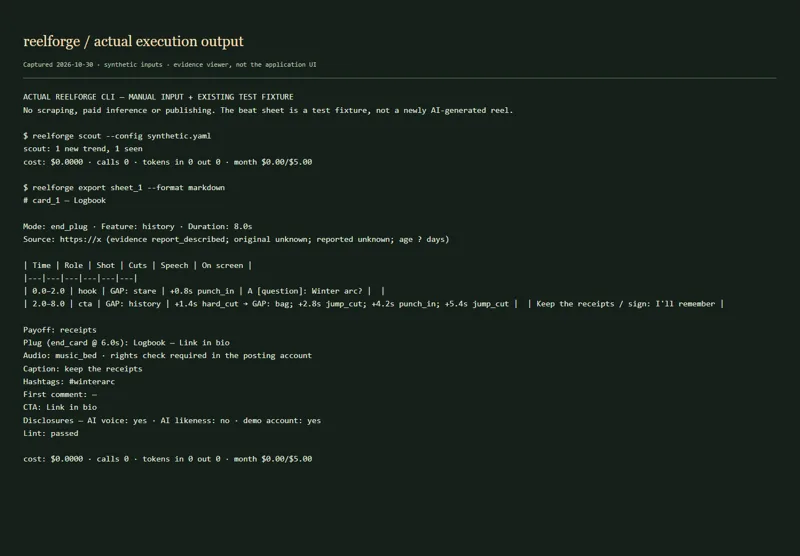
Describe a product through a profile and provide manual references or configured trend sources. The isolated run used one synthetic manual input and no external sources.
Analyze a reference into a format card, then plan a mix of modes such as culture or a brief end plug. The format and evidence are kept separate from a specific final clip.
Generate or supply a beat sheet, inspect its hook, timing, shots, dialogue and disclosures, then run lint before exporting. The captured export uses an existing repository test fixture, not a newly generated script.
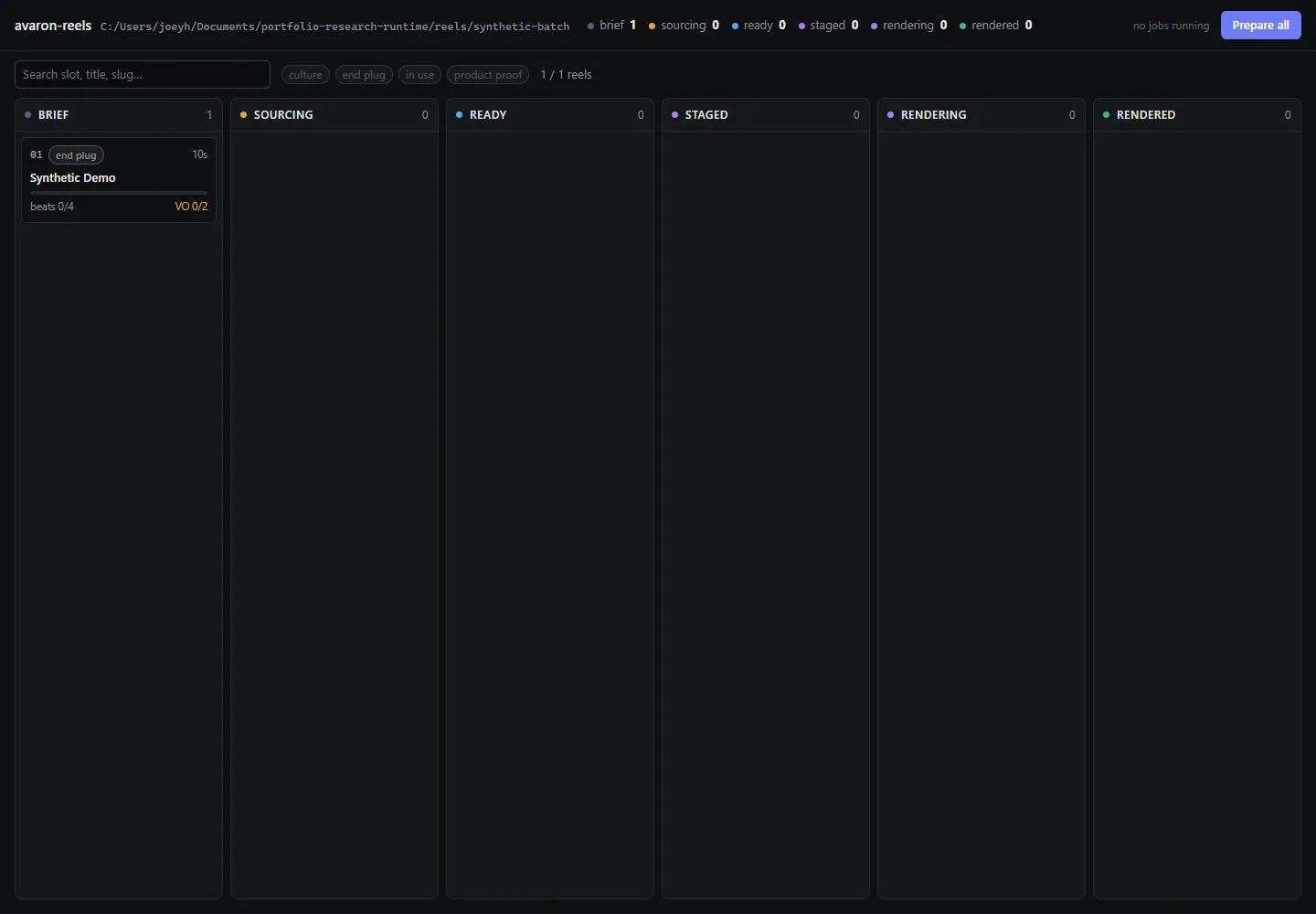
In AVARON reels, assign media and voices to beats, inspect missing/short assets, stage a validated package and render or hand-finish it. The local dashboard capture deliberately shows an unfilled fixture brief.
Inside the build
Typed storytelling
BeatSheet, Beat, Shot, Cut and source-reference models make duration, continuity, shot kind and disclosures explicit. Validators reject malformed timing rather than leaving every problem to a video editor.
Lint for creative constraints
Pacing and cut rhythm are treated as checkable constraints. Rules can flag held pictures, slow hooks or unsupported claims while leaving room for the creative script itself.
A separate production adapter
avaron_reels.stage checks voice and media coverage before writing files. This addresses a practical failure mode: missing or short media can shift later cues even when a renderer produces an output file.
Budget-aware integration
Provider clients, cached cards, replay fixtures and spending caps isolate expensive model calls. The captured scout/export run made no paid inference requests; that is a reproduction condition, not a monthly-spend achievement.
What I learned
Model the handoff
A central learning topic is deciding what the next tool needs: a stable JSON beat sheet, meaningful timing and explicit missing assets. A renderer cannot recover an intention that was never represented.
Creative automation still needs checks
Separating evidence, script, media assignment and export makes failures inspectable. The production dashboard is useful because it exposes the work remaining rather than treating a written brief as a finished video.